
The Legal Leap: Why Your Teen’s IEP Won’t Work for College Accommodations in California (And What Will)
A high school IEP or 504 plan does not automatically transfer to college accommodations in California. Once a student graduates, legal protections shift from the IDEA to the ADA and Section 504, which means colleges provide equal access—not guaranteed academic success. Below, you’ll learn exactly why the transition happens, what documentation colleges require, and how families can prepare students before move-in day.
What Changes After High School?
The biggest surprise for many California families is this:
An IEP ends at graduation.
Students who received years of support in high school often assume college accommodations will continue automatically. They do not. Colleges operate under a completely different legal system with different standards, expectations, and responsibilities.
This shift can feel abrupt. In high school, schools identify needs, coordinate services, and monitor progress. In college, the student becomes responsible for initiating nearly every part of the accommodation process.
Understanding this transition early can prevent denied accommodations, missed deadlines, and unnecessary academic stress during the first semester.
Understanding the Law: High School IEPs vs. College Accommodations in California
The Shift From IDEA to the ADA and Section 504

In K-12 education, students are protected under the Individuals with Disabilities Education Act (IDEA). IDEA is an entitlement law. Public schools must identify students with disabilities and provide specialized instruction and supports designed to help them succeed academically.
That changes completely in college.
Colleges and universities follow:
- The Americans with Disabilities Act (ADA)
- Section 504 of the Rehabilitation Act of 1973
These are civil rights laws, not entitlement laws.
The distinction matters.
Under the ADA and Section 504, colleges must provide equal access to education. They are not required to guarantee outcomes, alter academic standards, or fundamentally modify coursework.
That means accommodations are designed to remove barriers—not ensure grades, graduation, or mastery.
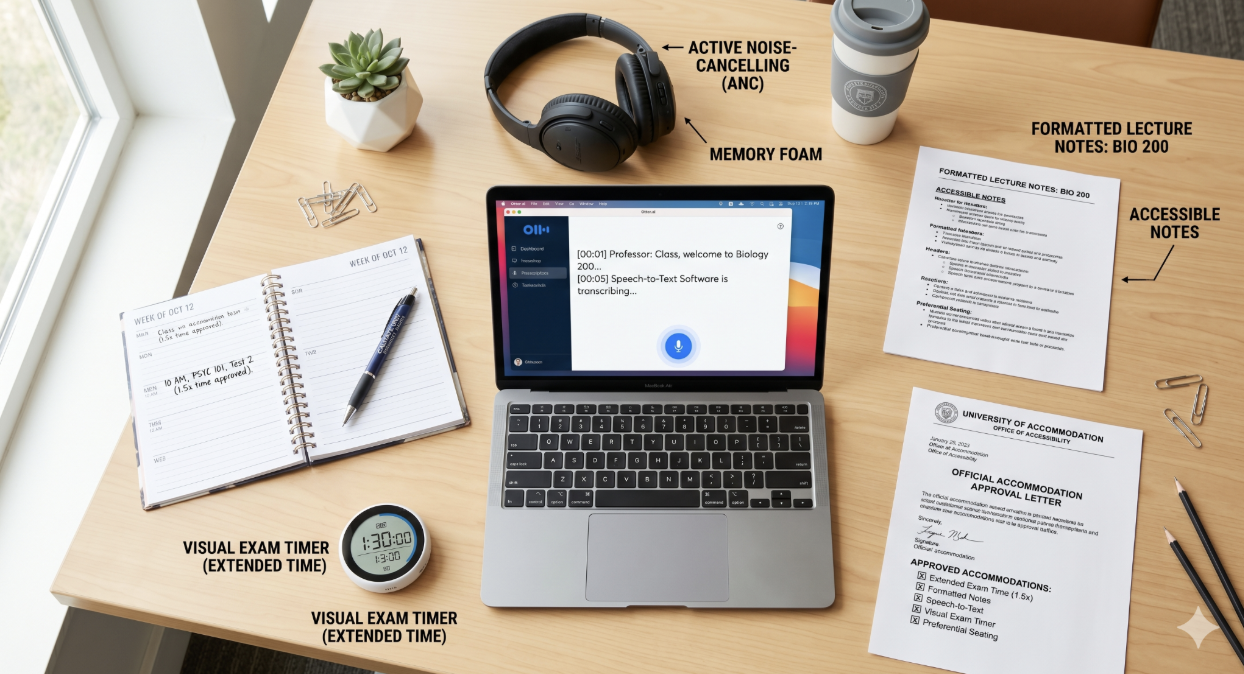
Examples of accommodations colleges may approve include:
- Extended testing time
- Reduced-distraction testing
- Note-taking support
- Priority registration
- Housing accommodations
- Assistive technology
However, colleges typically will not approve:
- Reduced homework requirements
- Modified grading standards
- Altered curriculum
- Unlimited deadline extensions
- Parent-directed intervention plans
This is one of the hardest transitions for families to understand because many high school supports simply do not exist in higher education.
Additional Protections for California College Students
California students also benefit from additional state-level protections.
These include:
- The Unruh Civil Rights Act
- California Disabled Persons Act
- Government Code Section 11135
Together, these laws prohibit disability discrimination at public and private colleges receiving state funding.
Still, these laws do not replace the student’s responsibility to request accommodations and provide documentation.
Why High School IEP Accommodations Don’t Automatically Transfer to College
The Move From “Entitlement” to “Eligibility”
One of the most important legal concepts families must understand is the difference between entitlement and eligibility.
In high school, students are entitled to services if they qualify under IDEA.
In college, students must prove eligibility for accommodations under ADA standards.
That means colleges evaluate whether the student’s disability substantially limits a major life activity in the academic environment.
An old IEP can help demonstrate a history of support. However, it usually is not enough by itself.
Most California colleges require updated documentation that includes:
- A formal diagnosis
- Current functional limitations
- Academic impact
- Specific accommodation recommendations
- Evidence-based rationale for each request
In practice, this often means students need an updated psychoeducational evaluation before entering college.
The Student Becomes the Chief Self-Advocate

This transition is not just legal. It is developmental.
In high school, parents, school psychologists, special education teachers, and case managers coordinate support systems.
In college, students must independently:
- Contact disability services
- Submit documentation
- Attend intake meetings
- Request accommodations
- Deliver accommodation letters to professors
- Follow up when problems arise
There are no IEP meetings in college.
There are no case managers monitoring missing assignments.
And because of FERPA privacy protections, colleges generally cannot discuss a student’s accommodations with parents unless the student signs a release.
I’ve evaluated hundreds of transition-age students, and this is often the biggest challenge—not intelligence, not testing, not academics.
The students who succeed in college accommodations are usually the students who can clearly explain their own learning profile.
How to Secure College Accommodations in California
Connecting With Disabled Student Programs and Services (DSPS)
Students should begin the accommodation process before classes start.
At California Community Colleges, the disability office is typically called Disabled Student Programs and Services (DSPS).
At universities, the office may be named:
- Student Accessibility Services
- Center for Accessible Education
- Disability Resource Center
- Office of Accessibility Services
Students usually complete:
- An intake application
- A documentation review
- An interactive interview discussing barriers and needs
- A formal accommodation request process
This meeting is more conversational than adversarial. Still, preparation matters.
Students should understand:
- Their diagnosis
- Their academic barriers
- Which accommodations have helped historically
- Why those supports remain necessary in college
Providing an Updated Psychoeducational Evaluation

This is where many families run into problems.
A high school IEP may contain outdated testing or vague accommodation recommendations that do not meet university standards.
Most colleges prefer evaluations completed within the last 3–5 years.
Strong documentation generally includes:
- DSM-5 diagnostic criteria
- Standardized cognitive testing
- Academic achievement testing
- Executive functioning measures
- Processing speed analysis
- Functional limitations
- Clear accommodation rationale
For example, saying a student “benefits from extra time” is often insufficient.
Instead, colleges want documentation explaining:
- Why processing speed deficits impair timed performance
- How the limitation substantially affects academic functioning
- Why 50% extended time specifically addresses the barrier
The clearer the clinical rationale, the stronger the accommodation request.
Authoritative guidance from the U.S. Department of Education and ADA National Network reinforces that colleges may require current documentation establishing disability-related limitations and accommodation needs. ADA National Network | U.S. Department of Education OCR
The Blueprint Transition Framework: A Tool for California Families
Over time, I noticed many families preparing for college using a high school mindset. They focused on preserving every accommodation instead of preparing students for independence.
That approach often backfires.
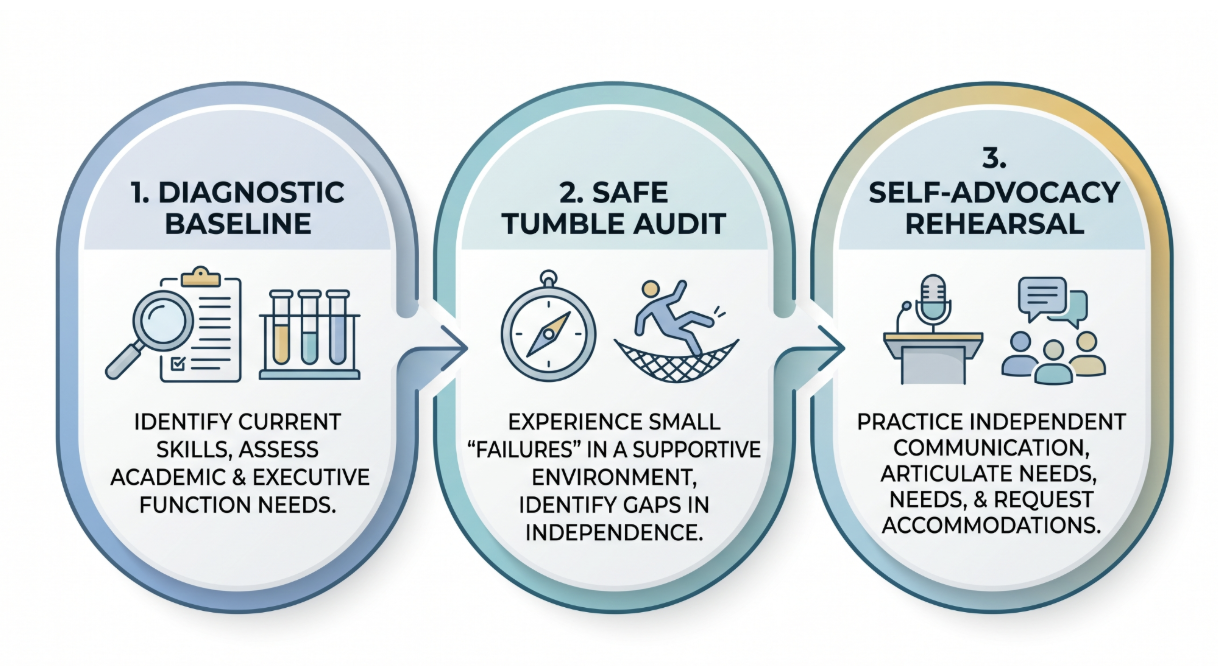
To bridge this gap, I developed the Blueprint Transition Framework, a three-step process designed specifically for California students transitioning from IDEA protections to ADA accommodations.
Step 1: The Diagnostic Baseline
Do not rely solely on old school testing.
A modern psychoeducational evaluation should assess how the student currently functions under adult academic expectations.
This evaluation should identify:
- Executive functioning deficits
- Processing speed weaknesses
- Working memory limitations
- Reading fluency challenges
- Attention regulation difficulties
I frequently use cross-battery assessment models and executive functioning tools such as the BRIEF-2 because colleges increasingly expect detailed evidence tied directly to functional limitations.
The goal is not just diagnosis.
The goal is building defensible documentation for college-level accommodations.
Step 2: The “Safe Tumble” Audit
This step is uncomfortable for many parents—but critical.
Before college, families should gradually reduce dependence on accommodations colleges are unlikely to approve.
That may include:
- Unlimited retakes
- Reduced assignments
- Parent-managed organization systems
- Modified grading expectations
Instead, students should begin practicing:
- Time management
- Professor communication
- Independent scheduling
- Self-monitoring
I call this the “safe tumble” phase because students are allowed to struggle while still living in a supportive environment.
Small failures in high school are safer than major failures during freshman year.
Step 3: The Self-Advocacy Rehearsal
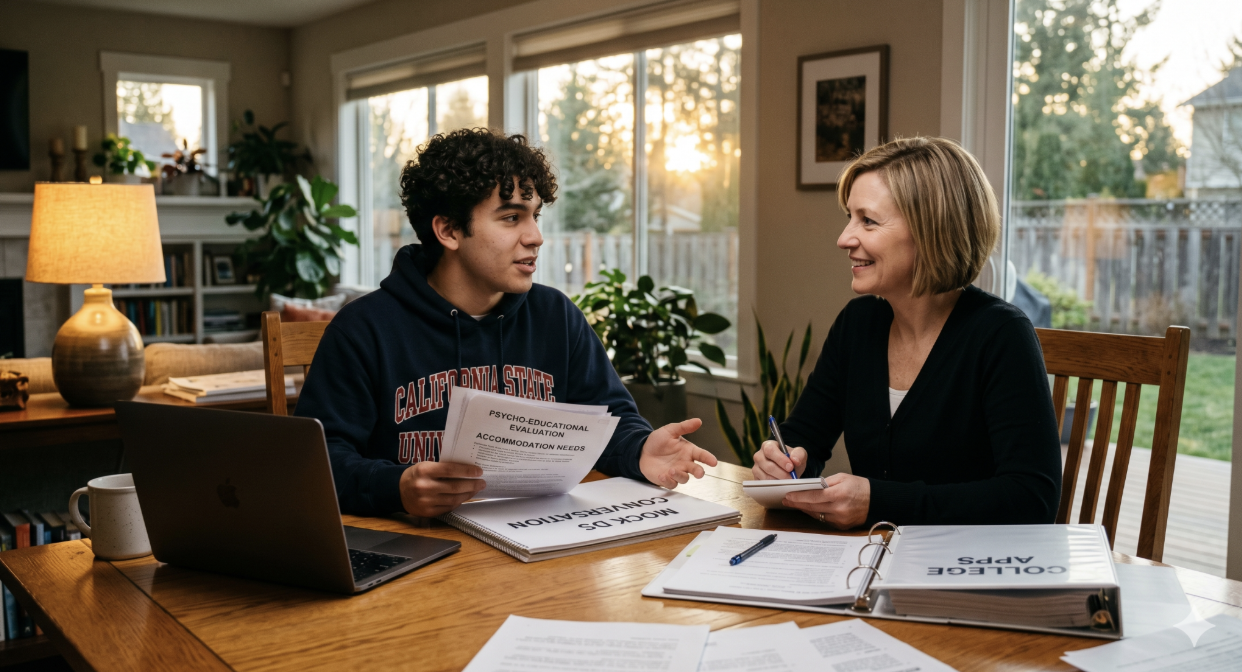
Students need practice discussing their disability confidently and accurately.
This is rarely taught directly in K-12 systems.
Before college, students should rehearse explaining:
- Their diagnosis
- Their learning profile
- Their barriers
- Their accommodation needs
For example:
“My evaluation shows a significant processing speed deficit that impacts timed exams. Extended testing time helps equalize access by allowing me to demonstrate knowledge without the timing barrier.”
That level of clarity matters.
College disability offices respond best when students can connect accommodations directly to documented functional limitations.
Should Students Avoid Accommodations in College?
Some professionals argue that students should reduce accommodation use before adulthood to build resilience and independence.
There is some truth to this.
Not every accommodation promotes long-term growth.
However, avoiding necessary accommodations can also create preventable academic and emotional harm.
The better question is not:
“Should my student use accommodations?”
The better question is:
“Which accommodations remove barriers without creating dependence?”
That balance looks different for every student.
The goal is not maximum support.
The goal is appropriate support.
Common College Accommodations California Students May Receive
Frequently Asked Questions
Does a high school IEP transfer to college?
No. IEPs end at graduation because colleges do not operate under IDEA.
Can colleges deny accommodations?
Yes. Colleges may deny requests if documentation is outdated, insufficient, or unsupported by functional limitations.
How recent should a psychoeducational evaluation be?
Most colleges prefer evaluations completed within the past 3–5 years, though requirements vary.
What is DSPS in California?
DSPS stands for Disabled Student Programs and Services, the disability support office within California Community Colleges.
Can parents manage accommodations in college?
Usually no. FERPA privacy laws limit parent involvement unless the student signs a release.
Conclusion: Preparing Your Teen for College Accommodations in California

The transition from high school accommodations to college accommodations is not automatic, and many California families underestimate how significant the legal shift really is.
Once students graduate, the system changes from school-directed support under IDEA to student-led advocacy under the ADA and Section 504.
That means preparation matters.
Students who enter college with updated documentation, realistic expectations, and strong self-advocacy skills are far more likely to secure the accommodations they need—and use them effectively.
The best time to prepare for college accommodations is before senior year ends.
A proactive psychoeducational evaluation, thoughtful transition planning, and gradual independence-building can make the difference between a stressful first semester and a confident start to college life.