
Drowning in Syllabi? How to Survive Unstructured Time in College
Surviving unstructured college time with ADHD or a learning disability requires proactive scheduling, utilizing college accommodations, and mastering active test-taking strategies. The leap from high school structure to university freedom demands advanced executive functioning skills that many students are still developing. Below, we walk through how to manage your syllabus, secure the right disability supports, and thrive in your new academic environment.
Why Unstructured College Time is Hard for ADHD

High school is heavily structured. You spend about 35 hours a week in a building where teachers monitor your progress. College completely flips this reality. You may only spend 12 to 15 hours a week in class.
This leaves a massive void of unstructured time. For a student with ADHD or a learning disability, this sudden freedom can quickly turn into a crisis.
The frontal lobe of the brain manages executive functioning. This includes planning, organizing, task initiation, and time management. Research shows that the frontal lobe in students with ADHD develops slower, sometimes not fully maturing until the mid-20s. This means an 18-year-old college freshman may have the executive functioning skills of a 15-year-old. You are not lazy. Your brain is simply trying to manage adult-level scheduling with a developing operating system.
How to Get College Accommodations
In high school, your parents and teachers likely managed your 504 plan or Individualized Education Program (IEP). In college, the rules change entirely.
High schools operate under the Individuals with Disabilities Education Act (IDEA), which legally guarantees student success. Colleges operate under the Americans with Disabilities Act (ADA), which only guarantees equal access. Because of this legal leap, your high school IEP or 504 plan expires when you graduate.
Stepping Up as a Self-Advocate

Colleges do not automatically know you have a learning difference. You must proactively reach out to your university's disability services office.
This process is entirely student-led. Due to privacy laws (FERPA), professors and accessibility coordinators will not speak to your parents without a signed waiver. You must fill out the intake forms. You must attend the intake interview. You must deliver your accommodation letters to your professors.
Submitting the Right Documentation
Your old high school IEP is usually not enough to get college accommodations. Universities typically require a comprehensive psychoeducational evaluation.
This documentation usually needs to be completed within the last three to five years. It must clearly state your diagnosis and outline your functional limitations. It must explicitly justify why you need the specific accommodations you are requesting.
Common Accommodations to Request
Every student's profile is unique. However, if your documentation supports it, colleges frequently approve:
- Extended time on exams and quizzes (usually 50% extra time).
- Reduced-distraction environments for testing.
- Priority registration to help you build an ADHD-friendly schedule.
- Permission to record lectures or access to peer note-takers.
Be aware that colleges rarely grant assignment deadline extensions. They expect you to manage your time and meet deadlines like every other student.
The "3-A Syllabus Survival Framework"
I have evaluated hundreds of neurodivergent students transitioning to higher education. The biggest hurdle is always time management. To bridge the gap, I recommend the 3-A Syllabus Survival Framework.
1. Audit Your Time
Do not rely on your memory to track due dates. Executive functioning deficits often cause "time blindness."
Take every syllabus on the first day of class and audit your semester. Create a visual master calendar. Block out your class times. Then, schedule your study hours right alongside meals, laundry, and gym time. Treat your study blocks like non-negotiable appointments.
2. Anticipate Task Demands
Break down long-term assignments immediately. If a ten-page paper is due in November, anticipate that task initiation will be difficult.
Work backward from the due date. Set interim deadlines for yourself. Give yourself a deadline for the outline, a deadline for the rough draft, and a deadline for the final edit. Try using the Pomodoro technique (25 minutes of work followed by a 5-minute break) to build focus stamina.
3. Activate Assistive Technology
Do not wait until midterm week to figure out how to study. Activate your tools early.
Use text-to-speech software to get through heavy reading loads. Use speech-to-text to dictate your essays and bypass the blank-page paralysis. Explore built-in accessibility features on your Mac or PC. These tools reduce cognitive fatigue and level the playing field.
Proven Test-Taking Strategies for College
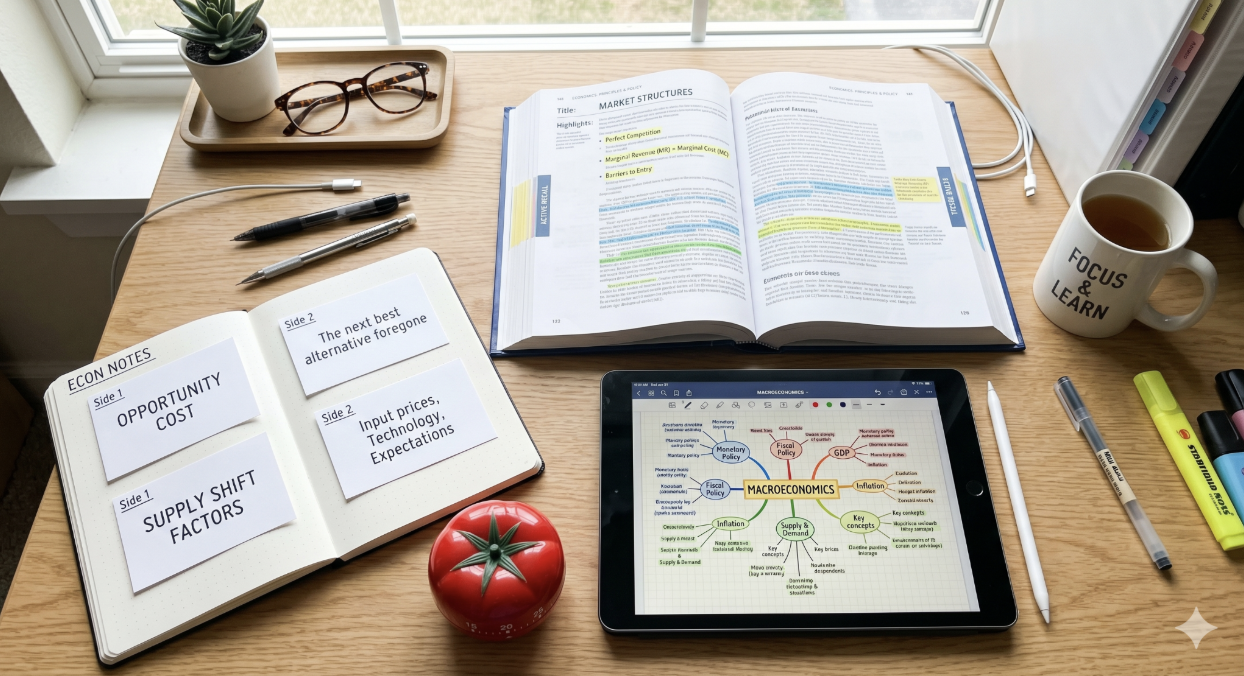
Even with extended time, you need effective test-taking strategies. Passive reading is not studying. Rereading your notes will not commit the information to your long-term memory.
Active Study Techniques
Use the SQ3R method: Survey, Question, Read, Recite, and Review. This forces your brain to actively engage with the text.
Form a study group. Explaining complex concepts to a peer is one of the fastest ways to expose what you don't actually understand.
Managing Test Anxiety
One in five college students experiences significant test anxiety. If your mind goes blank during exams, focus on active recall strategies during your prep. Test yourself under timed conditions at home.
If anxiety consistently impairs your academic performance, this is a legally protected disability. An updated evaluation can document this impairment and qualify you for a separate, quiet testing room.
Why I Wrote This
As a California-licensed Educational Psychologist, I specialize in providing psychoeducational evaluations for students enrolled in or preparing to attend college. In my work over 17 years, I frequently see bright and capable students crash during their freshman year simply because they lost their structural safety net. I want you to know that struggling with unstructured time is a neurological reality, not a character flaw. Getting the right diagnostic baseline empowers you to secure the accommodations you deserve.
FAQs About College Accommodations
Will my high school IEP automatically transfer to my university?
No. Your high school IEP or 504 plan does not automatically transfer. You must self-disclose your disability to the college and apply for accommodations as a new student.
Can I get deadline extensions for ADHD?
It is very rare. Colleges generally view meeting deadlines as an essential academic requirement and a time-management issue, not an access issue.
Does a college have to accept my older psychoeducational evaluation?
It depends on the college. Many require an evaluation completed within the last three to five years. If your documentation is outdated, you will likely need to schedule an updated assessment.